“Your Home Is Your Biggest Investment”
Rich Dad Poor Dad“Your Home Is Your Biggest Investment” is a familiar piece of financial advice that the book turns into a test of how people define an asset. Its decisive distinction is not whether a home matters to its owners, but whether it puts money into their pockets or draws money out. The narrator sets the saying against the cash-flow reasoning he learned from Rich Dad, showing how an emotionally powerful idea can conceal continuing costs, debt, and the opportunity cost of tying up money in a home.
The saying and the two-dad contrast
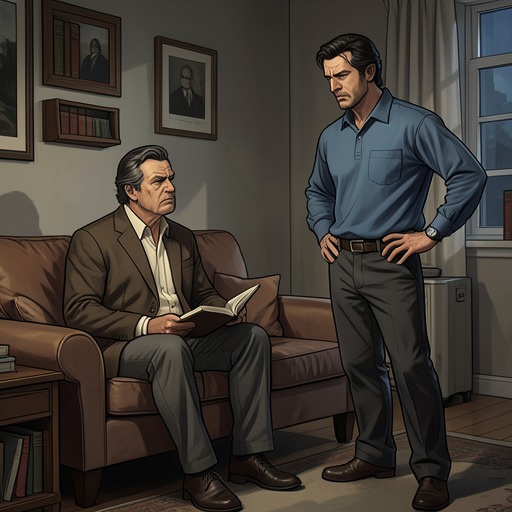
The belief appears as one of several conventional ideas the narrator associates with Poor Dad: a home is treated as a family’s greatest investment, and sometimes described simply as its greatest asset. Rich Dad held the opposite view, insisting that a house could be a liability. The contrast is not presented as a disagreement over whether a home is desirable. It is a disagreement about what financial category a home belongs in and what evidence should decide that category: its importance to the family, or the direction of its cash flow.
The book places that disagreement within a larger contrast in financial habits. Poor Dad urged safety and security, valued employment benefits, and regarded the home as the family’s largest investment. Rich Dad emphasized managing risk and building investments. Both paid their bills on time, but they differed over whether bills should be paid first or last; their homes likewise stood for different ways of thinking about money. The slogan’s familiarity does not make it neutral: in the book’s framework, accepting it without inspection can lead people to confuse a cherished possession with an asset that generates income.
The cash-flow test
The narrator recalls arguing with Poor Dad after his father explained why he considered their home his greatest investment. To make his objection concrete, the narrator drew a diagram showing the direction of cash flow and the additional expenses attached to ownership. A larger house, he argued, meant larger expenses, so money continued to flow out through the expense column. The diagram gives the disagreement a practical test: instead of relying on the label “asset,” examine what the home does to a household’s cash flow.
That test turns on the book’s distinction between assets and liabilities. The narrator’s case is that an owner-occupied home can take money out of a family’s pocket through mortgage payments and associated expenses rather than place income in it. He acknowledges that this is an alternative view of a popular idea and does not expect everyone to agree. A home can be a dream as well as a major purchase; precisely because it carries emotional weight, he warns, emotion can lower financial intelligence when money decisions are made.
The costs hidden by the label
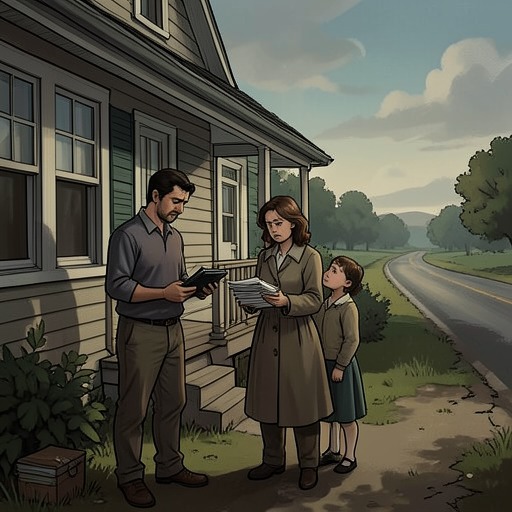
The book describes a pattern in which a family buys a dream house and then takes on property taxes, a car, furniture, appliances, mortgage debt, and credit-card debt. A child arrives, expenses grow, and the adults work harder. When consumer debt accumulates, a lender may offer a consolidation loan secured against the home. Folding credit-card debt into a mortgage can reduce the immediate payment by spreading the debt over thirty years, but the apparent relief does not erase the debt: it transfers it into the home loan and extends the period over which it is owed. The slogan can thus sit beside a household balance sheet increasingly filled with liabilities.
The narrator gives several further reasons not to assume that a house is a sound investment simply because it is a home. Many people, he says, buy again every few years and take out another thirty-year loan rather than reaching a point at which they own the successive houses outright. A mortgage-interest deduction does not remove the other costs of ownership, which are paid with after-tax dollars; even after the mortgage is paid, property taxes remain. He recalls his wife’s parents being shocked when taxes on their home rose to $1,000 a month after their retirement, straining their budget and making them feel compelled to move.
Nor does a home’s price necessarily rise. The narrator points to friends who in 1997 owed $1 million on a house that would then sell for $700,000. The discrepancy makes the book’s argument more specific than a general warning about expenses: the home’s market value can fall below the debt secured against it. The costs and risks therefore remain distinct from the family’s attachment to the property, and from the conventional phrase that classifies it as the household’s greatest investment.
Opportunity cost and the wider argument
For the narrator, the largest loss may be the opportunities forgone when too much money is tied up in a house. If money keeps flowing out through expenses instead of building an asset column, its owner may have to work harder to meet costs. By contrast, a young couple that puts more money into assets early may find that those assets grow and help cover later expenses, including the cost of sending children to college. The comparison is not just between owning and renting; it is between committing resources to an expensive home and beginning an investment portfolio while time remains for assets to grow.
The book also links the slogan to conformity. In its discussion of the “power of the mirror,” the narrator presents self-knowledge as the capacity to question accepted claims rather than repeat them because everyone else does. “Your home is an asset” and “Your home is your biggest investment” appear alongside other familiar recommendations, including taking a safe job and going further into debt for a tax break. The narrator’s challenge is to ask whether such advice makes sense in a particular household’s circumstances instead of treating its popularity as proof.
The saying therefore functions as more than a disputed claim about real estate. It condenses the book’s broader argument that financial literacy requires examining how money moves, questioning received rules, and separating emotional meaning from financial performance. The narrator does not deny that owning a home may be better than owning nothing, nor does he claim that every house has the same financial effect. His point is narrower and more practical: a home’s status as an asset cannot be established by calling it an investment. The cash flow, debt, costs, and opportunities displaced by the purchase have to be considered.